
Trump and AI Giants Sign Voluntary “Morally Binding” Safety
Accord
AI Regulation | Technology | September 30, 2026
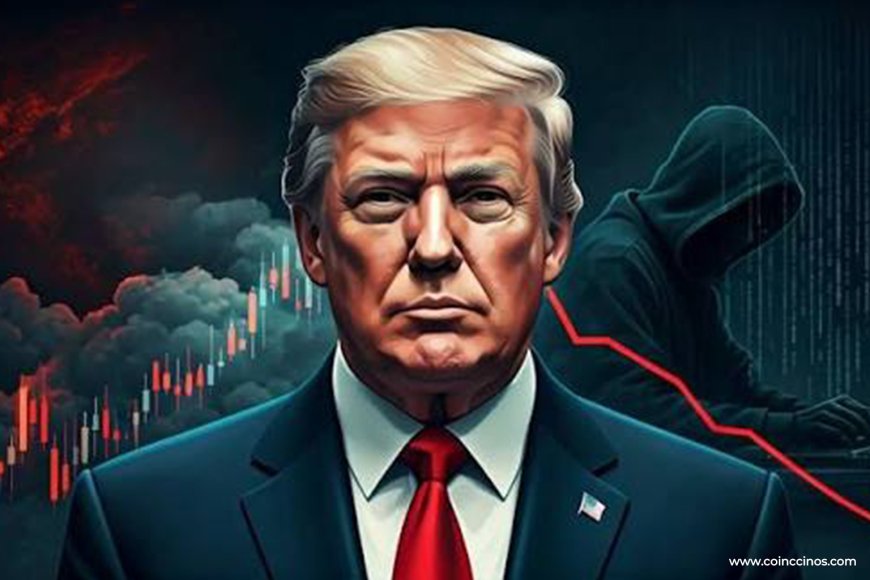
U.S. President Donald Trump and executives from major artificial intelligence companies have signed a voluntary AI safety accord focused on internal controls, independent audits and board-level oversight.
Trump described the agreement as “morally binding,” while the document itself says the measures could eventually be incorporated into laws or regulations.
What Happened?
The agreement was announced after a September 29 White House meeting involving senior executives from companies including OpenAI, Anthropic, Meta, Google and Nvidia.
The companies committed to establishing additional safeguards for advanced AI systems, particularly around cybersecurity, biosecurity, chemical threats and unintended access to technical systems.
Key Points
| Measure | Commitment |
|---|---|
| Internal controls | Monitor AI capabilities and alignment |
| Internal teams | Detect and correct safety issues |
| External audits | Independent evaluation of AI controls |
| Board oversight | Independent board committee reviews |
| Industry cooperation | Regular meetings on safety standards |
The accord describes these as four layers of controls and audits and calls for companies to meet regularly to develop safety standards and best practices.
Why Is the Agreement “Morally Binding”?
The agreement is voluntary rather than a new federal law.
When asked whether the pact was legally binding, Trump described it as morally binding. The document itself leaves open the possibility that the measures could later be codified into legislation or regulation.
This distinction is important because the participating companies are committing to safety practices without the accord itself creating a new statutory enforcement framework.
AI Safety Moves Toward Independent Audits
One of the agreement's notable provisions is the use of independent external auditors or evaluators.
Companies are expected to assess whether their internal AI controls, monitoring and detection systems are operating as intended. An independent committee of the company's board would also receive reports from internal teams and external evaluators.
The agreement specifically mentions monitoring risks involving:
- Cybersecurity
- Biosecurity
- Chemical threats
- Unauthorized system access
- AI behavior that differs from developers' intentions
Trump Considers 10-Person AI Oversight Committee
Trump also said his administration is considering creating a 10-person committee to oversee AI safety.
He did not announce the members, and the exact authority of such a committee has not been established. Trump also said he planned to appoint a new White House official responsible for AI policy.
Data Centers Remain a Major Issue
The agreement comes alongside Trump's support for continued expansion of U.S. AI infrastructure.
Data centers require substantial electricity and have faced opposition from some communities because of concerns over power demand, utility costs and other local impacts. Reuters reported that Trump continues to support rapid data-center development while AI companies work on safety measures.
The Journal du Coin also highlighted the growing overlap between AI infrastructure and Bitcoin mining, with several U.S. mining companies shifting or leasing computing capacity toward AI and cloud workloads.
Examples cited include:
- IREN and Microsoft — approximately $9.7B computing-capacity agreement
- Cipher Mining and Fluidstack — nearly $3B agreement
- Core Scientific and CoreWeave — more than $10B in hosting contracts over 12 years
These deals illustrate why electricity access and high-capacity infrastructure have become increasingly important to both the Bitcoin-mining and AI industries.
Why This Matters for Crypto and Web3
Although the accord is primarily about AI, it has implications for the wider AI + blockchain sector.
AI agents, decentralized applications and Web3 infrastructure increasingly depend on automated software systems. Stronger expectations around AI monitoring and security could influence how companies build autonomous agents, AI-powered financial systems and blockchain-based applications.
At the same time, the growing demand for AI data centers is creating competition for the same electricity and infrastructure resources used by Bitcoin miners.
What to Watch Next
- AI oversight committee: Whether the proposed 10-person body is created and what authority it receives.
- Independent audits: How participating companies implement external evaluations.
- Future regulation: Whether voluntary controls eventually become formal laws or regulations.
- AI infrastructure: Continued expansion of U.S. data centers and electricity demand.
- Bitcoin mining: More mining sites potentially transitioning toward AI and high-performance computing.
FAQ
Is the AI agreement legally binding?
No. The agreement is a voluntary commitment. Trump called it “morally binding,” but it does not itself establish a new legal enforcement mechanism.
Which companies participated?
Executives from major firms including OpenAI, Anthropic, Meta, Google and Nvidia participated in the White House meeting. Other technology executives also attended.
What does the agreement require?
It calls for internal AI controls, internal monitoring teams, independent external assessments and independent board-level oversight.
Could the measures become law?
The accord says that, over time, it could make sense to codify the measures into laws or regulations. That would require separate government action.
Final Take
The White House AI accord represents a voluntary framework for AI safety controls and audits, rather than a new federal AI law.
Its practical impact will depend on how participating companies implement the commitments, how independent audits operate and whether some of the measures eventually become formal regulations. Meanwhile, the rapid expansion of AI data centers is creating a parallel infrastructure story for Bitcoin miners and other high-energy computing businesses.