
Ethereum’s Comeback May Be Overdue as ETH Surges 20%
and Fundamentals Regain Attention
Ethereum (ETH) has delivered one of its strongest daily rallies in years, rising roughly 20% on August 19 as a combination of institutional demand, positive U.S. crypto-policy signals, Treasury liquidity and a major short squeeze pushed the asset sharply higher.
The move comes after months of relative underperformance, during which ETH spent much of 2026 trading around the $1,800–$2,000 range. Bankless argues that Ethereum's recent price weakness has increasingly diverged from the strength of its underlying ecosystem.
The latest rally could therefore represent more than a short-term bounce: it may signal that the market is beginning to reassess Ethereum's position within the broader crypto economy.
Ethereum Finally Delivers a Major Breakout
Ethereum's approximately 20% one-day gain on August 19 marked one of its biggest daily moves in the modern market era, according to Bankless.
The rally was particularly notable because ETH had spent much of the year behaving almost like a stablecoin, trading predominantly between $1,800 and $2,000 while other major cryptocurrencies periodically outperformed it.
Bankless notes that Ethereum's latest move saw ETH outperform virtually every other asset in the top 100 cryptocurrencies for the day.
The shift has brought renewed attention to whether ETH had become excessively discounted relative to its network fundamentals.
A Massive ETH Short Squeeze Amplified the Rally
The move was not driven by spot buying alone.
According to Bankless, approximately $1 billion in ETH short positions were liquidated during the rally. When leveraged traders' short positions are liquidated, exchanges effectively force those traders to buy ETH to close their positions.
That creates a feedback loop:
ETH rises → short positions liquidated → forced buying → ETH rises further → more shorts liquidated
This dynamic can transform an initial price increase into a much larger move within a short period.
The key question now is whether organic spot demand can maintain the rally after the short squeeze has faded.
U.S. Crypto Policy Adds Another Catalyst
Several macro and regulatory developments contributed to the positive market environment.
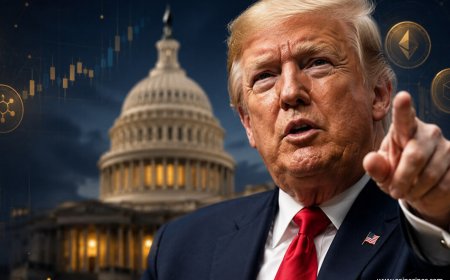
Bankless points to the White House Crypto Summit, where President Donald Trump called for passage of the CLARITY Act and again discussed the possibility of the United States acquiring reserves of Bitcoin and other cryptocurrencies.
If such a reserve strategy were eventually implemented broadly, it could potentially include Ethereum, although no specific ETH acquisition commitment was established in the cited remarks.
The combination of supportive policy rhetoric and improving market liquidity helped create a favorable environment for ETH.
Treasury Buybacks Improve the Liquidity Backdrop
Another important factor was the expansion of U.S. Treasury bond buybacks.
The move helped support broader financial-market liquidity and contributed to lower long-term Treasury yields.
For risk assets such as cryptocurrencies, falling yields can improve the relative attractiveness of assets that do not generate traditional fixed-income returns.
This created a broader market backdrop in which investors were more willing to increase exposure to crypto.
Spot Ethereum ETF Inflows Add Fundamental Support
ETH's rally was also accompanied by spot Ethereum ETF inflows, according to Bankless.
This is particularly important because ETF flows represent a potential bridge between traditional investment portfolios and Ethereum.
A combination of:
ETF inflows + spot demand + short covering + improving liquidity
provides a stronger foundation for a rally than short covering alone.
However, continued ETF inflows will be important if Ethereum is to sustain its recovery after the initial surge.
Ethereum May Be Undervalued Relative to Its Network
One of Bankless' central arguments is that Ethereum's market valuation may not fully reflect the strength of its ecosystem.
The article highlights Ethereum's position across several major categories, including:
- Smart-contract infrastructure
- Developer ecosystem
- Developer tooling
- DeFi
- NFTs
- Stablecoins
- Tokenized real-world assets
- Decentralized applications
- On-chain liquidity
- Traditional-finance experiments
Ethereum therefore remains one of the most widely used blockchain platforms despite its recent price underperformance.
Ethereum vs. Bitcoin Market Capitalization
Bankless highlights a striking valuation comparison.
At the time of its analysis:
- Bitcoin market cap: approximately $1.45 trillion
- Ethereum market cap: approximately $281 billion
That means Bitcoin's market capitalization was roughly five times larger than Ethereum's.
The comparison raises an important question:
Does Bitcoin really provide five times the utility or long-term potential of Ethereum?
There is no definitive answer, but the gap illustrates how dramatically market valuations can diverge from measures such as network utility, developer activity and application ecosystems.
Ethereum's Fundamental Position Remains Strong
Ethereum's price performance has been weak relative to some competitors, but the network itself continues to occupy a central position in the digital-asset economy.
Its ecosystem includes major infrastructure across:
DeFi
Ethereum remains a major hub for decentralized exchanges, lending, derivatives and other financial applications.
Stablecoins
A significant portion of the stablecoin ecosystem operates on Ethereum and Ethereum-compatible networks.
Tokenization
Ethereum continues to be a major platform for tokenized real-world assets and financial experiments.
Developers
The network maintains one of the largest blockchain developer ecosystems.
Applications
Thousands of decentralized applications and protocols are connected to Ethereum's broader infrastructure.
These factors form the basis for the argument that ETH's recent valuation may have become disconnected from Ethereum's underlying network strength.
Could Ethereum's Rally Continue?
The latest move has revived a historical pattern.
Bankless notes that ETH's previous major 20%+ daily move occurred in May 2025, when ETH moved from roughly $1,811 to $2,207.
Following that move, ETH gained approximately 125% over the next three months, according to the article's cited historical comparison.
That does not mean the same performance will repeat in 2026.
Market conditions, liquidity, ETF flows and Ethereum's relative valuation are different.
But the historical example demonstrates why traders are paying attention to the current breakout.
Bullish Scenario
Ethereum's recovery could strengthen if:
- Spot ETH ETF inflows remain positive.
- ETH maintains its recent breakout.
- Institutional demand continues increasing.
- U.S. crypto regulation becomes more supportive.
- Treasury yields remain favorable.
- ETH/BTC begins recovering.
- Ethereum's DeFi and tokenization activity continues expanding.
In this scenario, the recent 20% move could become the beginning of a broader repricing rather than a temporary short squeeze.
Bearish Risks
Despite the bullish narrative, several risks remain.
Short-Squeeze Exhaustion
Much of the initial rally was amplified by forced buying from liquidated shorts.
Once that positioning is cleared, the market needs genuine buyers.
Macro Reversal
A renewed increase in Treasury yields or tighter financial conditions could put pressure on crypto.
ETF Outflows
If institutional Ethereum products experience sustained outflows, the recent demand signal could weaken.
Resistance and Profit Taking
A 20% daily move can encourage traders to take profits, potentially producing a sharp retracement.
ETH/BTC Weakness
Ethereum's relative performance against Bitcoin remains an important indicator of whether a genuine altcoin rotation is underway.
Key Ethereum Market Signals
| Indicator | Current Significance |
|---|---|
| 1-day ETH move | Approximately +20% |
| Recent trading range | ~$1,800–$2,000 |
| ETH short liquidations | ~$1B |
| ETH market cap cited by Bankless | ~$281B |
| BTC market cap cited by Bankless | ~$1.45T |
| BTC/ETH market-cap ratio | ~5:1 |
| Key demand signal | Spot ETH ETF inflows |
| Macro catalyst | Treasury buybacks / lower yields |
What Investors Should Watch Next
The next stage of Ethereum's recovery will depend on whether the market can transition from forced buying to sustained demand.
1. ETH ETF Flows
Continued inflows would provide evidence of institutional demand.
2. ETH/BTC Ratio
A sustained improvement could signal that Ethereum is beginning to outperform Bitcoin on a broader basis.
3. Spot Trading Volume
Strong spot volume would make the recovery more convincing.
4. Futures Open Interest
A sharp increase in leverage could create another liquidation-driven move in either direction.
5. Ethereum Network Activity
DeFi, stablecoin and tokenization activity can help investors assess whether price is catching up with fundamentals.
6. U.S. Regulatory Developments
Progress on crypto legislation could influence institutional sentiment.
The Bigger Picture
Ethereum's latest rally comes at an interesting point in the evolution of crypto markets.
Bitcoin remains the dominant institutional cryptocurrency, but Ethereum occupies a different role.
Bitcoin is primarily positioned around:
Scarcity + monetary properties + institutional reserve demand
Ethereum is increasingly positioned around:
Smart contracts + DeFi + stablecoins + tokenization + applications + financial infrastructure
That difference makes the valuation gap between BTC and ETH especially interesting.
Ethereum does not necessarily need to replace Bitcoin to outperform it during certain market phases.
Instead, the market may simply be beginning to recognize that Ethereum's role in the digital economy extends far beyond its token price.
Final Take
Ethereum's approximately 20% daily surge on August 19 has brought ETH back into the spotlight after months of relative underperformance. The rally was supported by spot ETH ETF inflows, favorable U.S. crypto-policy signals, expanded Treasury buybacks and a massive short squeeze that liquidated roughly $1 billion in ETH shorts.
The more important question is what happens next.
If institutional inflows continue and Ethereum's fundamentals begin translating into stronger demand for ETH, the recent move could represent the beginning of a broader recovery.
If the rally was primarily driven by short covering, however, some of the gains could quickly reverse.
For now, Ethereum has reminded the market that it can still move—and move fast. The next challenge is proving that this is more than a single explosive trading session.