
SEC Proposes New Crypto Rules With $75M Fundraising
Exemption and Safe Harbor
The U.S. Securities and Exchange Commission (SEC) has proposed a new regulatory framework called “Regulation Crypto Assets,” marking a significant shift toward a more tailored approach to digital-asset offerings in the United States.
Announced on August 18, 2026, the proposal would create specific exemptions for certain crypto investment-contract offerings, introduce a potential safe harbor for qualifying crypto assets, and reduce some regulatory uncertainty for projects seeking to raise capital in the U.S.
The proposal is particularly significant because it could give crypto entrepreneurs clearer pathways to raise funds while maintaining disclosure and investor-protection requirements.
What Is the SEC Proposing?
The SEC's Regulation Crypto Assets proposal is designed to establish a securities-offering framework specifically adapted to certain crypto assets and investment contracts.
The SEC says the initiative builds on its March 2026 interpretation explaining how federal securities laws apply to certain crypto assets and transactions.
The proposal contains several major components:
- A $5 million one-time offering exemption over a four-year period.
- A $75 million annual offering exemption during each 12-month period.
- Disclosure requirements for issuers using the exemptions.
- Additional financial reporting requirements for larger offerings.
- A proposed conditional safe harbor for certain crypto assets.
- Potential preemption of certain state securities registration requirements.
$75 Million Fundraising Exemption
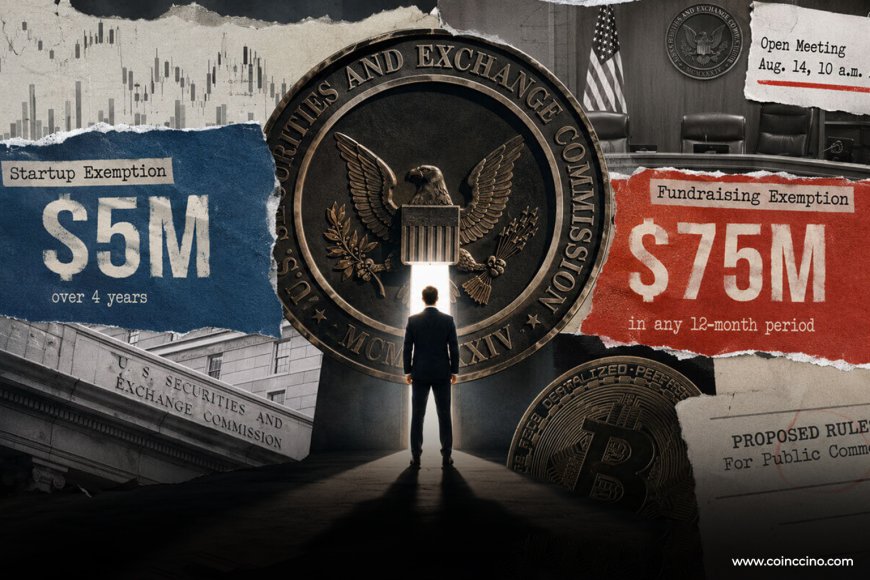
One of the most important elements is the proposed exemption allowing eligible issuers to raise up to $75 million during a 12-month period without following the full traditional securities-registration process.
The exemption would not mean crypto companies can raise money without regulatory obligations.
Issuers would still need to provide principles-based narrative disclosures, while companies using the larger exemption would also face financial-statement and ongoing-reporting requirements.
This could potentially make regulated U.S. fundraising more accessible for crypto startups and blockchain projects.
Smaller Projects Could Also Benefit
The SEC is proposing a separate exemption allowing an issuer to conduct a one-time offering of up to $5 million over four years.
That provision could be particularly relevant to early-stage blockchain companies that need capital to develop their networks or products but may not have the resources required for a traditional securities offering.
The goal is to provide a more proportionate regulatory pathway based on the scale of the fundraising activity.
Proposed Crypto Safe Harbor
Another major component is a proposed conditional safe harbor.
Under the proposal, a crypto asset could potentially fall outside the definition of an investment contract for federal securities-law purposes if specific conditions are satisfied.
The SEC's proposal also contemplates a safe harbor after an issuer has completed or permanently ceased the essential managerial efforts that it represented or promised to perform under an investment contract.
This could become one of the most closely watched parts of the framework because the classification of crypto assets has been one of the industry's biggest regulatory uncertainties.
???????? SEC Wants Crypto Innovation to Stay in the U.S.
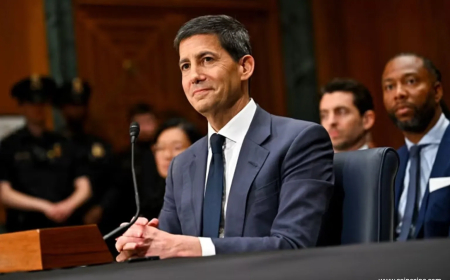
SEC Chairman Paul Atkins said the proposal is intended to provide crypto entrepreneurs and market participants with clearer pathways to raise capital under federal securities laws.
The SEC also said the framework could reduce incentives for crypto businesses to establish operations offshore because of regulatory uncertainty in the United States.
That could be strategically important for the U.S. crypto industry.
For years, companies have argued that regulatory uncertainty makes it difficult to determine whether a token, fundraising event or blockchain product will fall under securities laws.
State Securities Rules Could Also Be Affected
The proposed framework would also preempt certain state securities-law registration and qualification requirements for securities issued under the proposed Regulation Crypto Assets exemptions.
The proposal would extend this treatment to certain secondary-market transactions as well.
If adopted, this could simplify the regulatory landscape for qualifying crypto projects operating across multiple U.S. states.
Regulation Crypto Assets at a Glance
| Proposed Measure | Details |
|---|---|
| Small offering exemption | Up to $5M over four years |
| Larger offering exemption | Up to $75M per 12 months |
| Disclosures | Required under both exemptions |
| Financial statements | Required under larger exemption |
| Ongoing reporting | Required under larger exemption |
| Safe harbor | Proposed for qualifying crypto assets |
| State-law preemption | Proposed for certain qualifying offerings |
Why This Could Matter for Crypto Startups
The biggest potential benefit is regulatory predictability.
A startup planning a token-based fundraising campaign could potentially have clearer thresholds and obligations instead of relying on uncertain interpretations of existing securities regulations.
That could encourage more companies to:
- Raise capital domestically.
- Build blockchain products in the U.S.
- Seek regulatory compliance earlier.
- Provide investors with standardized disclosures.
- Avoid relocating operations solely because of regulatory uncertainty.
Industry participants have welcomed the proposal as a potential move toward greater regulatory clarity.
What It Could Mean for Investors
For investors, clearer rules could have both positive and negative consequences.
Potential benefits
More transparent disclosures
Greater clarity around token offerings
More regulated investment opportunities
Reduced uncertainty around qualifying projects
Potentially stronger U.S. crypto markets
Potential risks
Not every crypto asset will qualify.
The proposed exemptions still contain regulatory requirements.
Safe-harbor eligibility would depend on specific conditions.
The proposal is not yet a final rule.
Investors should therefore avoid interpreting the announcement as a blanket exemption for cryptocurrencies.
Could This Be Bullish for the Crypto Industry?
The proposal could be viewed as constructive for the U.S. digital-asset sector.
A clearer framework may make it easier for legitimate companies to access capital while giving investors more information about the projects they are funding.
It could also reduce the incentive for some blockchain companies to establish themselves in jurisdictions outside the United States.
However, the market impact will depend heavily on the final rules and how regulators interpret and enforce them.
SEC Regulation vs. Congressional Legislation
The SEC's proposal comes at a time when broader crypto legislation in Congress remains unresolved.
Reuters reported that the stalled Clarity Act has increased the importance of regulatory agencies such as the SEC and CFTC in shaping U.S. crypto policy.
This creates an important distinction:
SEC rules can provide regulatory pathways.
But:
Congressional legislation could establish longer-lasting statutory rules.
Industry participants therefore continue to watch both regulatory rulemaking and congressional action.
The Proposal Is Not Final Yet
The SEC has opened a 60-day public-comment period following publication of the proposal in the Federal Register.
During this period, companies, investors, legal experts and industry organizations can submit feedback.
The SEC will then consider the comments before determining whether and how to finalize the framework.
That means the final rules could differ from today's proposal.
Bigger Picture: A New Era for U.S. Crypto Regulation?
The proposed Regulation Crypto Assets framework represents a significant change in tone from the enforcement-heavy approach that characterized much of the previous regulatory environment.
Instead of relying primarily on enforcement actions to determine how securities laws apply to crypto projects, the SEC is proposing defined thresholds, disclosure requirements and potential safe-harbor conditions.
That could create a more rules-based environment for the industry.
At the same time, the durability of the framework could depend on future legislation and administrations. Reuters notes that industry participants remain concerned that agency-created rules could be changed by future regulators without congressional legislation establishing a permanent framework.
What Crypto Investors Should Watch
The next major developments include:
- Federal Register publication
- 60-day public-comment period
- Industry responses to the $5M and $75M exemptions
- Details surrounding the proposed safe harbor
- SEC changes following public comments
- Congressional progress on broader crypto legislation
- Potential implications for tokenized securities and secondary markets
Final Take
The SEC's proposed Regulation Crypto Assets framework could become one of the most important U.S. crypto regulatory developments of 2026.
The proposed $5 million and $75 million fundraising exemptions, combined with a conditional safe harbor and clearer disclosure requirements, could provide crypto companies with a more defined route to raise capital while remaining within the federal securities framework.
However, this is still a proposal—not final law. The 60-day public-comment period and subsequent SEC review could significantly influence the final framework.
For the crypto industry, the bigger message is clear: the U.S. SEC is moving toward a more tailored regulatory framework for digital assets, potentially replacing years of uncertainty with defined rules and thresholds.