DeFi Explained: How Decentralized Finance Works, Its Core Protocols and Key Risks
Publication Date: November 4, 2026
Category: DeFi | Blockchain | Education
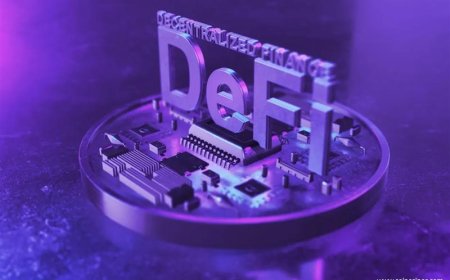
Decentralized finance (DeFi) is changing how people access financial services by using blockchain networks and smart contracts instead of relying entirely on traditional intermediaries. Users can trade cryptocurrencies, lend and borrow digital assets, provide liquidity and participate in protocol governance through on-chain applications.
As the sector develops, understanding how these systems operate—and where their risks come from—is increasingly important for crypto users and developers.
Key Highlights
-
DeFi uses blockchain-based smart contracts to coordinate financial activities.
-
Decentralized exchanges use liquidity pools and automated market makers to facilitate token swaps.
-
Lending protocols allow users to borrow against crypto collateral.
-
Oracles provide external information, including asset prices, to blockchain applications.
-
Smart-contract vulnerabilities, liquidation events and interconnected protocol failures remain major risks.
How Does DeFi Work?
DeFi refers to financial applications that operate through blockchain networks and smart contracts. A smart contract is software deployed on a blockchain that automatically executes predefined instructions when specified conditions are met.
Instead of depending on a traditional bank or broker to manage every transaction, users interact directly with protocols through compatible wallets.
However, decentralization does not mean every system operates without intermediaries. Some applications still depend on administrators, governance participants, data providers or other infrastructure services.
The Main Components of DeFi
1. Decentralized Exchanges (DEXs)
DEXs allow users to exchange digital assets through smart contracts. Many use automated market makers (AMMs), which rely on liquidity pools rather than traditional order books.
Liquidity providers deposit tokens into these pools and may receive a share of trading fees. Their returns depend on trading activity, pool design and asset-price movements.
2. Lending and Borrowing
DeFi lending protocols connect users who supply assets with borrowers seeking liquidity.
Most systems require borrowers to deposit collateral worth more than the amount borrowed. If the collateral's value falls below a defined threshold, the protocol can automatically liquidate the position to protect the lending pool.
3. Yield Aggregators
Yield aggregators use automated strategies to move funds between DeFi opportunities. Users typically deposit assets into vaults, while the system manages selected strategies and may compound returns.
These services can simplify participation, but they introduce additional smart-contract, strategy, fee and governance risks.
4. Oracles
Oracles deliver external information, such as cryptocurrency prices, to smart contracts. Lending platforms and derivatives protocols rely on accurate data to calculate collateral values, funding requirements and liquidation thresholds.
Incorrect, delayed or manipulated data can create significant losses.
5. Governance and DAOs
Some DeFi protocols use decentralized autonomous organizations (DAOs) and governance tokens to coordinate decisions. Token holders may vote on protocol upgrades, fees, incentives and treasury management.
However, voting power can become concentrated among large token holders, limiting the influence of smaller participants.
Why DeFi Protocols Are Connected
One of DeFi's defining characteristics is composability—the ability for different protocols to interact and build on one another.
For example, a user may deposit tokens into a lending protocol, use the resulting position in another application and access additional financial services through connected smart contracts.
This creates opportunities for innovation, but it also introduces interconnected risk. A failure involving one protocol, oracle, bridge or collateral asset can affect several connected applications.
Key Risks Users Should Understand
DeFi offers open access and programmable financial services, but it does not eliminate financial or technical risk.
Important risks include:
-
Smart-contract vulnerabilities: Coding errors or exploits can result in lost funds.
-
Impermanent loss: Liquidity providers may underperform simply holding the deposited assets.
-
Liquidation risk: Falling collateral values can trigger forced asset sales.
-
Oracle manipulation: Inaccurate price feeds can affect lending and trading systems.
-
Governance concentration: Large token holders may exert disproportionate influence.
-
Composability risk: Problems in one protocol can spread to connected applications.
Users should understand how a protocol manages funds, collateral, upgrades and emergency situations before interacting with it.
What Happens Next?
DeFi development continues across decentralized exchanges, lending markets, derivatives, automated yield strategies and governance systems. Improvements in security, oracle infrastructure and user experience will be important to the sector's long-term development.
As these applications become more interconnected, risk management and transparent protocol design will remain essential.
Final Takeaway
DeFi is more than cryptocurrency trading without a traditional exchange. It is a connected financial ecosystem built from smart contracts, liquidity pools, lending markets, oracles and governance systems.
Its open architecture creates new possibilities for financial services, but users must also understand the risks of automation, collateral, leverage and interconnected protocols.
Disclaimer: This article is for informational and educational purposes only and does not constitute financial or investment advice. Coinccino does not provide buy or sell signals.