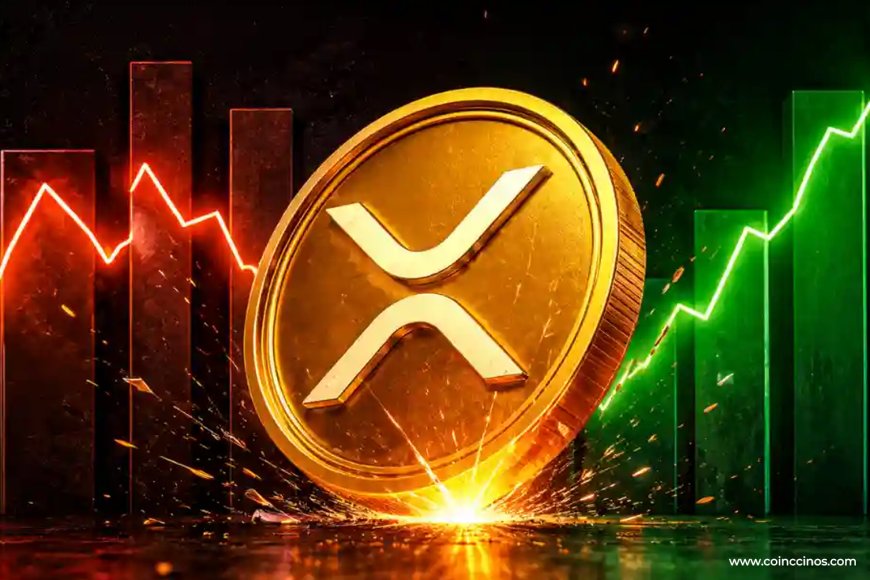

Ripple’s XRP Gets Two Major Updates: Mastercard Joins XRPL
Hackathon as 21Shares Changes ETF Pricing Benchmark
Ripple and the XRP ecosystem are entering another important phase as Mastercard deepens its involvement with the XRP Ledger while 21Shares prepares a technical change to the benchmark used to price its XRP exchange-traded fund.
The two developments arrive as institutional interest in XRP and the XRP Ledger continues to evolve, giving the market fresh signals around payments, tokenization and regulated investment products.
Mastercard Joins XRP Ledger Hackathon
The first major development involves Mastercard, which has been announced as a sponsor of the XRP Ledger Hackathon scheduled for October 24–25, immediately ahead of the Ripple Swell 2026 conference.
Ripple Swell is scheduled for October 27–29, making the hackathon a major developer-focused event within the XRP ecosystem.
The XRP Ledger Foundation highlighted Mastercard's participation and emphasized the network's suitability for payment-related applications.
For XRP supporters, Mastercard's involvement is significant because it represents participation from one of the world's largest traditional payments companies—not simply another cryptocurrency company.
Mastercard and Ripple Have Been Expanding Their Relationship
The hackathon sponsorship is not Mastercard's first interaction with Ripple.
Earlier in 2026, Mastercard included Ripple in a broader crypto partnership initiative designed to connect blockchain technology with Mastercard's global payments infrastructure.
The program also involved companies including Binance, Gemini, PayPal, Paxos and Circle.
Mastercard has separately been building infrastructure for stablecoin and blockchain payments, while Ripple has been positioning the XRP Ledger and RLUSD as enterprise settlement infrastructure.
This creates an increasingly interesting intersection between:
Traditional payments
Stablecoins
Tokenized assets
XRP Ledger infrastructure
Mastercard Is Also Exploring AI-Powered Payments
Mastercard's blockchain strategy extends beyond conventional payments.
The company recently launched Agent Pay for Machines, an infrastructure initiative designed to allow autonomous AI agents to conduct transactions.
The system is intended to support high-volume, low-value payments and can work across cards, bank accounts and stablecoins.
More than 30 technology, financial and crypto companies have participated in the initiative.
This could eventually create another potential use case for blockchain networks such as XRPL, particularly where automated systems require:
- Fast settlement
- Low transaction costs
- Programmable payments
- Compliance controls
- Transaction transparency
Why Mastercard's XRP Ledger Involvement Matters
Mastercard sponsoring an XRPL developer event does not mean Mastercard is adopting XRP as its primary global settlement asset.
That distinction is important.
The announcement primarily concerns developer engagement and the XRP Ledger ecosystem.
However, it does demonstrate that a major traditional payments company is willing to engage directly with developers building on XRPL.
That can help strengthen the ecosystem's institutional credibility.
The Second Major Update: 21Shares Changes XRP ETF Benchmark
The second major development involves 21Shares' XRP ETF.
According to a recent SEC filing, 21Shares is changing the benchmark used to calculate the fund's net asset value.
Beginning August 27, 2026, the ETF will use the FTSE XRP Index instead of the CME CF XRP-Dollar Reference Rate – New York Variant.
The change follows 21Shares' decision to enter into a licensing agreement with FTSE International.
The previous benchmark agreement with CF Benchmarks is scheduled to terminate on August 31.
What Does the ETF Benchmark Change Mean?
An ETF benchmark is essentially the reference used to determine the value of the underlying asset for the fund.
For investors, the important point is that the change is primarily technical and administrative.
The filing states that the amendments do not materially impact the rights of the trust or its shareholders.
So investors should not interpret the change as:
A new XRP ETF
A change in XRP custody
A fundamental change to the fund's investment strategy
A guarantee of higher XRP returns
Instead, it is a change in the pricing reference used by the ETF.
21Shares Also Changes the Timing of Sponsor-Fee Payments
The same filing contains another technical adjustment.
21Shares is changing the timing of the sponsor fee from weekly in arrears to at least quarterly in arrears.
The fee will continue to be payable in XRP.
The updated trust agreement incorporates this change alongside the transition to the FTSE XRP Index.
Again, these changes are primarily structural rather than a fundamental alteration to the ETF's exposure to XRP.
Institutional XRP Infrastructure Is Expanding
The two developments come against a wider backdrop of institutional activity surrounding the XRP Ledger.
Ripple has been expanding its digital-capital-markets infrastructure through investments in companies such as ZILO and Licuido, aimed at strengthening capabilities involving transfer agency technology, issuance and collateral mobility.
Ripple says these investments build on existing partnerships and are intended to bring regulated digital-asset infrastructure to the XRP Ledger.
This suggests that the XRP ecosystem is increasingly targeting capital markets and financial infrastructure, rather than focusing solely on cryptocurrency payments.
From Payments to Tokenized Assets
The evolution of XRPL is becoming broader.
The ecosystem is increasingly associated with:
Payments
Fast settlement and cross-border transactions.
Stablecoins
Including Ripple's RLUSD.
Institutional Finance
Banks and financial institutions exploring blockchain settlement.
Tokenization
Digitizing funds, securities and other real-world assets.
AI Payments
Potential machine-to-machine settlement.
ETFs
Providing traditional investors with regulated XRP exposure.
This diversification could become important for XRP's long-term investment narrative.
XRP's Institutional Story Is Becoming More Complex
The traditional XRP thesis has largely focused on:
Cross-border payments + XRP liquidity
But the ecosystem is evolving into something broader:
Payments + stablecoins + tokenization + capital markets + institutional infrastructure
That distinction matters.
Financial institutions may not necessarily need to hold large amounts of XRP permanently to use XRPL infrastructure.
Therefore, investors should distinguish between:
Adoption of the XRP Ledger
and
Direct demand for XRP
The two can overlap, but they are not identical.
Could Mastercard's Involvement Benefit XRP?
Potentially—but indirectly.
Mastercard's participation could:
- Increase developer interest in XRPL
- Strengthen institutional credibility
- Encourage new payment applications
- Bring traditional-finance developers into the ecosystem
- Create opportunities for future blockchain-payment integrations
However, Mastercard's hackathon sponsorship does not establish a specific commitment to using XRP for settlement.
That distinction is essential when evaluating the potential market impact.
The Two XRP Developments
| Development | Details |
|---|---|
| Mastercard | Sponsor of XRP Ledger Hackathon |
| Hackathon | October 24–25, 2026 |
| Ripple Swell | October 27–29, 2026 |
| 21Shares ETF | XRP benchmark being changed |
| New benchmark | FTSE XRP Index |
| Old benchmark | CME CF XRP-Dollar Reference Rate – New York Variant |
| Benchmark change begins | August 27, 2026 |
| Old license termination | August 31, 2026 |
| Sponsor fee timing | Weekly → at least quarterly |
| Fee denomination | XRP |
Why the ETF Change Matters
Although the benchmark change is technical, ETF infrastructure is becoming increasingly important to the XRP market.
Spot XRP ETFs provide traditional investors with exposure without requiring them to directly hold XRP.
That can make regulated investment products an important source of institutional demand.
Recent market analysis has reported that U.S. spot XRP ETFs have accumulated substantial net inflows since launching, although the pace of new inflows has varied significantly over time.
The key question is therefore not simply whether ETFs exist.
It's whether:
ETF inflows → sustained XRP purchases → reduced available supply → stronger market demand
can develop into a persistent cycle.
Important Risks
The latest announcements are positive for the ecosystem, but investors should avoid assuming that they automatically translate into a higher XRP price.
Mastercard Does Not Equal XRP Adoption
Mastercard's participation in an XRPL event does not mean the company has committed to using XRP as a settlement asset.
ETF Benchmark Changes Are Technical
The 21Shares benchmark transition does not fundamentally change the ETF's exposure.
XRPL Adoption ≠ XRP Demand
Institutions can use XRPL infrastructure without necessarily holding XRP for long periods.
Crypto Market Conditions Still Matter
XRP remains highly sensitive to Bitcoin, liquidity and broader risk appetite.
What to Watch Next
Several upcoming developments could determine whether the latest institutional momentum translates into stronger XRP demand.
1. XRP Ledger Hackathon
Watch what developers actually build with Mastercard involved.
2. Ripple Swell 2026
The October conference could produce additional institutional partnerships and product announcements.
3. XRP ETF Flows
Persistent inflows would provide stronger evidence of institutional demand.
4. Tokenization Growth
More financial assets moving onto XRPL could increase network usage.
5. RLUSD Adoption
Growth in Ripple's stablecoin could strengthen the broader XRPL ecosystem.
6. U.S. Crypto Regulation
Regulatory clarity remains an important potential catalyst for XRP.
Bullish Scenario
XRP's long-term outlook could improve if several trends converge:
Mastercard involvement
Institutional XRPL adoption
Growing tokenization
Strong ETF inflows
RLUSD expansion
Favorable U.S. regulation
Such a combination would strengthen the argument that XRPL is becoming meaningful financial infrastructure.
Bearish Scenario
The opposite scenario would involve:
- ETF inflows slowing sharply
- Mastercard engagement remaining limited to developer activities
- Institutions choosing alternative blockchain infrastructure
- Weak XRP liquidity
- Reduced crypto-market risk appetite
- XRPL growth failing to translate into XRP demand
Under that scenario, positive headlines could have only a temporary effect on the XRP price.
Final Take
The XRP ecosystem has received two important updates.
First, Mastercard is joining the XRP Ledger Hackathon as a sponsor, strengthening the connection between one of the world's largest traditional payment networks and the XRPL developer ecosystem.
Second, 21Shares is changing the pricing benchmark for its XRP ETF from the CME CF XRP-Dollar Reference Rate to the FTSE XRP Index beginning August 27. The change is primarily technical and does not materially alter shareholders' rights.
Together, the announcements reinforce a broader trend:
XRP is increasingly being discussed within the institutional financial infrastructure conversation—not just the cryptocurrency market.
But investors should keep one distinction in mind:
Institutional adoption of XRPL does not automatically equal institutional demand for XRP.
The next major test will be whether ecosystem growth, ETF demand, tokenization and payment adoption eventually create sustained demand for the XRP token itself.
For now, however, Mastercard's deeper engagement and the continued development of regulated XRP investment products give the XRP ecosystem another significant institutional boost.