$6.3B Binance Hack Revives Debate Over US CLARITY Act as Lawmakers Push for Stronger Crypto Oversight
Publication Date: October 31, 2026
Category: Regulation / Crypto Security / Global Crypto News
Introduction
The reported $6.3 billion Binance security breach has brought the United States' proposed Digital Asset Market Clarity Act back into the regulatory debate, with lawmakers arguing that clearer rules and stronger oversight could help address vulnerabilities across the cryptocurrency industry.
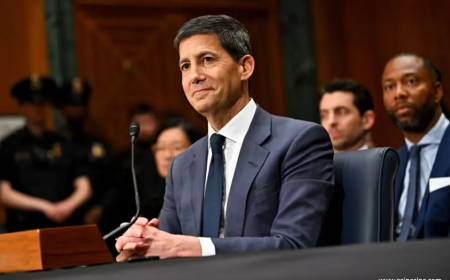
US Senator Cynthia Lummis has pointed to the incident as an example of why crypto companies need greater legal certainty when responding to suspicious transactions and security threats. Commodity Futures Trading Commission (CFTC) Chair Mike Selig has also used the incident to emphasize the importance of a federal registration framework for cryptocurrency exchanges.
The discussion comes at a difficult moment for the legislation. The CLARITY Act failed to advance through a key Senate procedural vote in September, leaving its future uncertain. The Binance incident has now renewed questions about whether the absence of a comprehensive federal market-structure framework leaves parts of the crypto industry exposed to regulatory uncertainty.
Beyond the regulatory debate, the breach has affected market sentiment. DeFi total value locked (TVL) fell 5.3% on October 30 to $83.95 billion, while stablecoin supply declined to $296.6 billion, according to figures cited by AMBCrypto from DeFiLlama.
The latest developments have therefore connected three major issues: exchange security, US cryptocurrency regulation and liquidity conditions across digital-asset markets.
Key Highlights
-
The reported Binance security incident involved approximately $6.3 billion in digital assets, according to Binance's estimate cited by AMBCrypto.
-
Senator Cynthia Lummis argued that clearer legal rules could help crypto firms respond more quickly when suspicious transactions are flagged.
-
CFTC Chair Mike Selig renewed calls for a federal registration framework for crypto exchanges.
-
The CLARITY Act failed to advance in a September 15 Senate procedural vote, receiving 49 votes in favor and 50 against.
-
DeFi total value locked declined 5.3% on October 30 to $83.95 billion.
-
Stablecoin supply fell to approximately $296.6 billion, remaining below the $300 billion level.
-
Around $1.5 billion in leveraged crypto positions were reportedly liquidated during the market sell-off.
-
Bitcoin briefly traded around $76,400, making the $76,000–$76,400 region an important short-term market reference.
1. Binance Security Incident Puts Crypto Regulation Back in Focus
The Binance security incident has become one of the largest reported security events in cryptocurrency history.
According to Binance's estimate cited in AMBCrypto's October 31 report, approximately $6.3 billion in digital assets were affected. The incident reportedly involved activity across multiple blockchain networks and raised concerns about the security of exchange infrastructure.
The scale of the reported breach has intensified discussions about how cryptocurrency platforms should identify suspicious activity, respond to law-enforcement requests and coordinate with other market participants.
For regulators, the incident is not simply about the amount of cryptocurrency involved. It also raises questions about the responsibilities of exchanges, their cybersecurity procedures and the speed at which potentially suspicious transactions can be addressed.
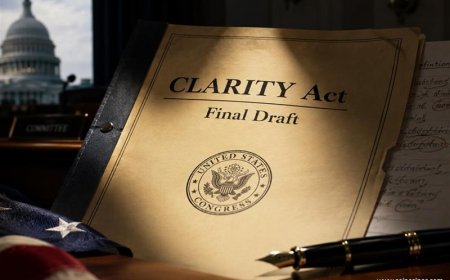
The debate has renewed attention on the CLARITY Act, legislation designed to establish a more defined federal regulatory framework for digital-asset markets.
However, it is important to distinguish between the incident itself and the legislation's potential impact. The CLARITY Act is primarily a market-structure and regulatory-jurisdiction proposal. It should not be interpreted as a standalone cybersecurity law or a guarantee that a similar exchange breach could have been prevented.
2. Senator Cynthia Lummis Says Regulatory Uncertainty Matters
US Senator Cynthia Lummis has argued that the Binance incident demonstrates why the crypto industry needs clearer legal rules.
According to AMBCrypto, Lummis suggested that a more clearly defined regulatory environment could help crypto companies respond when law-enforcement authorities identify suspicious transactions.
Her argument centers on the time-sensitive nature of crypto security incidents. Digital assets can move across wallets and blockchain networks quickly, making coordination between exchanges, regulators and law-enforcement agencies particularly important.
Lummis emphasized the cost of delays, warning that every minute lost during an incident can mean more money becomes difficult to recover.
Her comments also drew attention to the scale of the reported Binance breach. AMBCrypto compared the approximately $6.3 billion figure with the previously reported LuBian and Bybit incidents, arguing that the latest event was larger than those two cases combined.
The broader policy question is whether clearer rules would improve cooperation between exchanges and authorities while protecting legitimate users.
Nevertheless, regulatory clarity alone cannot prevent compromised credentials, insider-related vulnerabilities or failures in operational security. Effective protection also requires robust technical controls, internal access management, incident-response procedures and independent security assessments.
3. What Is the CLARITY Act and Why Does It Matter?
The Digital Asset Market Clarity Act is proposed US legislation intended to establish clearer rules for digital-asset markets.
One of the central issues it seeks to address is the division of regulatory responsibilities between two major US agencies:
-
Securities and Exchange Commission (SEC): Oversees securities markets and securities-related activities.
-
Commodity Futures Trading Commission (CFTC): Regulates derivatives markets and has specific authority over commodity-related markets and anti-fraud matters.
The crypto industry has faced years of uncertainty over how different digital assets should be classified and which regulator should oversee the businesses facilitating their trading.
The CLARITY Act aims to establish a clearer framework for determining when digital assets and related transactions fall under securities laws and when qualifying digital commodities and their trading intermediaries should come within a CFTC-supervised framework.
If enacted, the legislation could establish more defined requirements for registered digital-commodity exchanges, brokers and dealers. These could include obligations relating to customer assets, disclosures, recordkeeping, conflicts of interest and market integrity.
For crypto businesses, clearer rules could reduce uncertainty around operating in the US market. For customers, a more defined regulatory structure could establish clearer expectations about platform responsibilities and protections.
However, the legislation would not eliminate every regulatory question. Agencies would still need to implement significant parts of the framework through rulemaking, and some issues would continue to depend on how the final law is written.
4. Why the CLARITY Act Failed to Advance in September
Despite receiving attention from the crypto industry and lawmakers, the CLARITY Act encountered significant political and policy obstacles.
On September 15, 2026, a Senate procedural cloture motion to advance consideration of the legislation failed by a vote of 49–50. The motion required 60 votes to proceed.
The result left the bill at the procedural stage rather than moving it into Senate debate.
Several issues contributed to the difficulties surrounding the legislation.
Stablecoin rewards
One major disagreement concerned whether crypto platforms should be allowed to provide rewards connected with payment stablecoins.
Banking groups have raised concerns that stablecoin rewards could encourage customers to move funds away from traditional bank deposits. Crypto industry participants, meanwhile, have argued that overly restrictive rules could limit competition and innovation.
Regulatory responsibilities
Lawmakers also faced disagreements over how responsibilities should be divided between federal agencies and state authorities.
A clearer federal framework could reduce regulatory fragmentation, but questions remain about how much enforcement authority states should retain.
Ethics and conflicts of interest
Provisions addressing conflicts of interest involving public officials became another contentious part of the negotiations.
Disagreements over the proposed safeguards contributed to the difficulty of building sufficient political support.
Legislative negotiations
The wider process also faced criticism over negotiations between lawmakers, industry participants and political stakeholders. Reporting by CoinDesk described disagreements over the drafting process, stablecoin provisions and political negotiations as factors behind the stalled legislation.
The failed vote does not formally terminate the bill. Senate procedure leaves a possible route for reconsideration, but the legislation's future remains uncertain.
5. CFTC Chair Mike Selig Calls for a Federal Exchange Registration Framework
CFTC Chair Mike Selig has also highlighted the Binance incident as a reason to strengthen the regulatory framework for cryptocurrency exchanges.
His argument focuses on the difference between operating within a regulated financial-market environment and operating from jurisdictions where US regulatory oversight may be limited.
According to AMBCrypto, Selig argued that offshore exchanges may not have cybersecurity safeguards comparable to those expected in regulated US financial markets.
He also drew attention to vulnerabilities in supporting infrastructure, including compromised personal or employee devices. This is an important distinction because a security incident can originate from an operational weakness rather than a flaw in blockchain technology or a smart contract.
Selig further highlighted the transparency of public blockchains.
Although attackers may use privacy tools or transaction-obfuscation services, on-chain transaction records can still provide investigators with information that may help trace the movement of stolen assets.
This creates a potential role for regulators and blockchain analytics firms in identifying suspicious transactions and following funds across networks.
A federal registration framework could give regulators a more structured basis for overseeing exchanges and establishing expectations for their operations. However, registration by itself would not guarantee that a platform is immune to cyberattacks.
6. DeFi TVL Falls as Crypto Market Confidence Weakens
The regulatory debate is unfolding alongside a decline in broader crypto-market liquidity.
According to DeFiLlama figures cited by AMBCrypto, total value locked across decentralized finance fell by 5.3% on October 30 to approximately $83.95 billion.
This was reported as the lowest level since August 21.
TVL measures the value of digital assets deposited in DeFi protocols. It is widely used as an indicator of activity and capital committed to decentralized applications, although it can change because of both asset withdrawals and cryptocurrency price movements.
The decline suggests that DeFi experienced a significant reduction in measured value during the market sell-off.
Stablecoin supply also fell to approximately $296.6 billion, remaining below the $300 billion level since October 24.
Stablecoins are an important part of crypto-market liquidity because they are commonly used for trading, lending, payments and decentralized finance applications.
A reduction in stablecoin supply can indicate weaker demand for crypto-market liquidity, although supply figures alone do not establish whether investors are moving funds into traditional financial assets or simply changing their holdings within the crypto ecosystem.
Together, the TVL and stablecoin figures point to a more cautious environment across digital-asset markets.
7. Approximately $1.5 Billion in Leveraged Positions Liquidated
The market reaction extended beyond DeFi.
AMBCrypto cited approximately $1.5 billion in liquidations of leveraged crypto positions during the sell-off, as Bitcoin briefly fell toward $76,400.
Liquidations occur when exchanges automatically close leveraged positions because traders no longer have sufficient collateral to maintain them.
During a rapid decline, long positions are particularly vulnerable. Forced closures can create additional selling pressure and amplify short-term price movements.
The reported liquidations indicate that leverage played a significant role in the market reaction to the security incident.
Altcoins also showed mixed performance. Pepe (PEPE), Sky (SKY) and Bitcoin Cash (BCH) recorded gains in the period covered by the report, while MemeCore (M), Ethena (ENA) and Pump.fun (PUMP) experienced notable losses.
This divergence suggests that the market reaction was not uniform across all digital assets.
Bitcoin's ability to remain above the $76,000 region and potentially recover toward $80,000 was identified as an important short-term consideration. These levels are market references, not guaranteed support or recovery targets.
8. What the Binance Incident Could Mean for the Future of Crypto Regulation
The latest incident has strengthened the argument for a more coordinated approach to cryptocurrency oversight.
There are several areas where clearer rules could influence the industry.
Exchange registration and accountability
A defined registration framework could establish consistent obligations for exchanges operating within the relevant US regulatory system.
Customer asset protection
Clearer requirements around custody, segregation, recordkeeping and operational controls could improve transparency and accountability.
Coordination with law enforcement
Defined procedures for responding to suspicious activity and lawful requests could help reduce uncertainty during urgent security incidents.
Cybersecurity expectations
Regulatory frameworks could encourage more consistent security practices, although detailed cybersecurity requirements would depend on the final legislation and implementing rules.
International cooperation
Crypto assets move across borders, so domestic regulation alone may not be sufficient. Cooperation between exchanges, blockchain analytics providers, law-enforcement agencies and international regulators remains important.
The Binance incident demonstrates that crypto security is not only a technical issue. It also involves governance, operational controls, legal responsibilities and coordination between different jurisdictions.
What Happens Next?
Several developments will determine whether the current regulatory debate leads to concrete legislative action.
1. CLARITY Act negotiations
Lawmakers may attempt to revive the legislation or negotiate a revised version. Its progress will depend on whether sufficient bipartisan support can be secured.
2. Further statements from US regulators
Comments from the SEC, CFTC and other agencies may provide additional insight into how authorities intend to approach exchange oversight and market structure.
3. Binance's security response
The exchange's investigation, recovery efforts and operational updates will remain important to the industry's assessment of the incident.
4. On-chain monitoring and fund recovery
Blockchain analytics firms and other market participants will continue monitoring the movement of funds associated with the breach.
5. Crypto liquidity and market sentiment
Changes in DeFi TVL, stablecoin supply, derivatives positioning and Bitcoin's price action may indicate whether the market is regaining confidence.
Final Takeaway
The reported $6.3 billion Binance security incident has renewed pressure on US lawmakers to establish clearer rules for the cryptocurrency industry.
Senator Cynthia Lummis and CFTC Chair Mike Selig have used the event to emphasize the importance of regulatory certainty, exchange oversight and stronger coordination around security threats.
The CLARITY Act could establish a more defined framework for digital-asset markets, but it is not a direct solution to every cybersecurity problem. Its progress remains uncertain after the September Senate procedural vote failed to reach the required 60-vote threshold.
Meanwhile, the decline in DeFi TVL, lower stablecoin supply and substantial leveraged liquidations show that the consequences of the incident extend beyond exchange security.
The central challenge for policymakers is to create rules that improve accountability and customer protection without unnecessarily restricting innovation. Whether the Binance incident becomes a catalyst for renewed legislative negotiations will be an important development to watch in the coming weeks.
Informational Disclaimer
This article is published by Coinccino for informational and educational purposes only. It does not constitute financial, investment, trading or legal advice. Cryptocurrency markets involve significant risks, including price volatility, liquidity constraints, cybersecurity threats, regulatory uncertainty and leveraged trading losses. Coinccino does not provide buy or sell signals and does not guarantee investment outcomes. Readers should verify information through official sources and conduct independent research before making financial decisions.