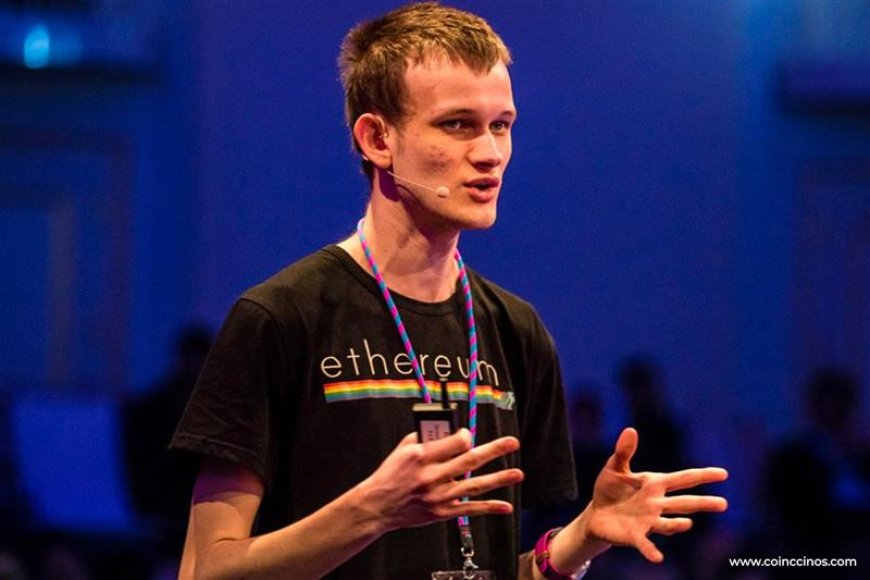

Vitalik Buterin Wants Crypto to Adopt Housing's Long-
Term Investment Discipline, Not Speculative Trading
Ethereum co-founder Vitalik Buterin believes cryptocurrency platforms should adopt some of the characteristics that have traditionally made homeownership an attractive long-term investment, including stability, disciplined holding and reduced incentives for speculative behaviour.
In a November 18 post on X, Buterin argued that younger generations investing more in stocks and digital assets rather than residential property could weaken financial incentives that encourage homeowners to support continuously rising housing prices.
However, he also acknowledged that housing has an important advantage over modern digital investments: it has traditionally been treated as a relatively safe, long-term asset that people do not easily liquidate.
His comments raise a broader question for the cryptocurrency industry: can digital assets evolve beyond short-term speculation and become more suitable for responsible wealth building?
Key Highlights
-
Buterin wants digital assets to adopt some of housing's long-term investment characteristics.
-
He says younger investors moving wealth into stocks and crypto could reduce incentives to keep housing prices artificially high.
-
He criticised modern investment platforms for encouraging irresponsible financial behaviour.
-
A recent Pew report found inflation-adjusted rents in Raleigh fell 15% between 2022 and 2025 following housing policy reforms.
-
His earlier research has promoted low-risk DeFi applications, including payments, savings and fully collateralised lending.
1. Why Buterin Is Comparing Crypto With Homeownership
Buterin's argument centres on the difference between housing as both a basic necessity and an investment.
Homeowners often benefit financially when property prices rise. This can create conflicting incentives: while society needs affordable housing, existing property owners may prefer prices to remain high or increase.
Buterin suggested that younger generations investing more of their savings in stocks and digital assets could reduce some of these incentives.
However, he did not argue that cryptocurrency should replace homeownership. Instead, he highlighted something traditional property investment has offered: a culturally accepted way to build wealth through relatively long-term ownership.
He described housing as a policy- and culture-supported investment that is comparatively safe and not easily liquidated.
By contrast, cryptocurrency platforms frequently make buying, selling and switching assets almost instantaneous, potentially encouraging short-term speculation.
2. Raleigh Housing Market Provides the Background
Buterin's comments followed a discussion about housing affordability in Raleigh, North Carolina.
A November 16 study by The Pew Charitable Trusts examined how changes to local zoning and development regulations helped increase housing construction.
Raleigh's annual housing permits increased from an average of 3,301 units between 2017 and 2020 to 5,731 between 2021 and 2024, a rise of approximately 74%.
The city also relaxed restrictions affecting townhouses and apartment development and eliminated minimum parking requirements.
According to Pew, inflation-adjusted rents declined by 15% between 2022 and 2025.
The example illustrates how increasing housing supply can improve affordability, even as population and demand continue to grow.
Buterin's broader point is that financial systems should not create incentives that make essential goods unnecessarily expensive simply because their owners benefit from rising prices.
3. What Would More Responsible Crypto Investment Look Like?
Buterin did not announce a specific new cryptocurrency project or provide a detailed product blueprint in his November 18 post.
However, his comments connect with ideas he has previously discussed about making Ethereum useful for everyday financial activities.
In a September 2025 essay, he argued that low-risk decentralised finance could become an important foundation for Ethereum's economy.
He highlighted applications such as:
-
Payments: Accessible digital payment infrastructure.
-
Savings: Financial products designed around mainstream currencies and assets.
-
Fully collateralised lending: Borrowing arrangements backed by sufficient assets.
-
Asset access: Using decentralised platforms to access established financial instruments.
The central idea is to create applications that provide practical financial value rather than relying primarily on speculative tokens, temporary incentives or aggressive trading activity.
Such products would still need strong safeguards, transparent risk disclosures and reliable infrastructure.
4. Why Crypto Cannot Simply Be Treated Like Real Estate
The comparison also exposes an important limitation.
Residential property is a physical asset with a direct use: providing a place to live. Cryptocurrency assets are digital instruments whose values can fluctuate significantly with market sentiment, liquidity and technological developments.
Digital assets can also carry risks involving smart-contract vulnerabilities, exchange failures, custody arrangements and regulatory changes.
Making crypto investments less liquid would not automatically make them safer. Long-term holding strategies need to be supported by sound asset design, transparency and investor protections.
Buterin's proposal is therefore better understood as a challenge to digital investment platforms and their incentives, rather than a claim that cryptocurrencies already offer the stability of residential property.
What Happens Next?
The industry will be watching whether DeFi developers increasingly prioritise savings, payment services, collateral management and long-term financial tools over products designed mainly for rapid trading.
For Ethereum, this could reinforce the case for practical financial applications that generate sustainable network activity.
Whether these products can provide the reliability and consumer protections associated with traditional financial systems remains an open question.
Final Takeaway
Vitalik Buterin wants cryptocurrency to become more than an environment for buying and selling volatile tokens. His latest comments call for digital investment products that encourage patience, responsible financial behaviour and long-term wealth building.
The comparison with housing is not a declaration that crypto is safer than real estate. Instead, it highlights a design challenge for the industry: building digital financial systems that reward sustainable participation rather than constant speculation.
Disclaimer: This article is for informational and educational purposes only and does not constitute financial or investment advice. Coinccino does not provide buy or sell signals.