
US Judge Acquits MIT Brothers in $25 Million
Ethereum MEV Case, Ending Federal Prosecution
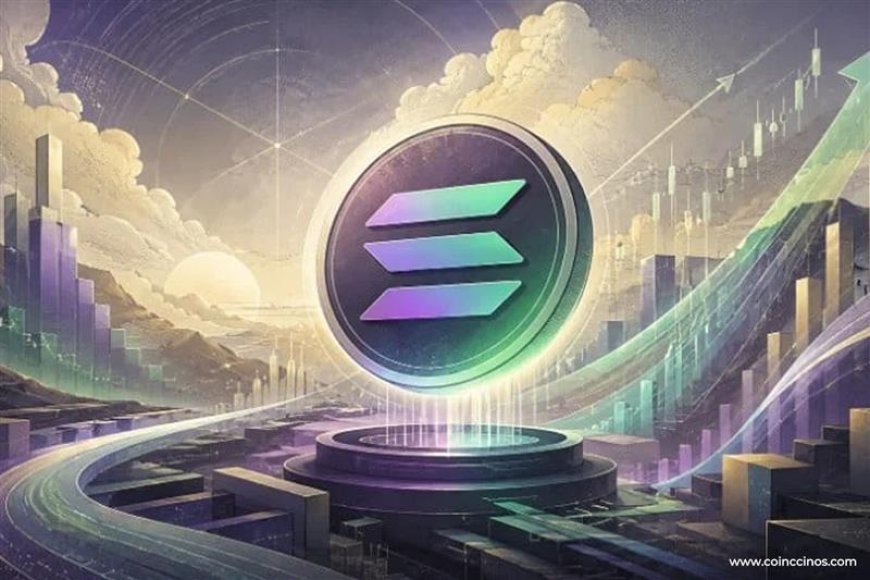
Intercontinental Exchange (ICE), the parent company of the New York Stock Exchange (NYSE), is exploring the possibility of operating a validator on the Solana blockchain. The development comes as Solana officially retires its long-standing mainnet-beta designation and introduces Protocol 1.0.
The institutional connection could strengthen Solana's position in the developing tokenized securities market. However, ICE has not committed to operating a validator or announced a launch date.
Meanwhile, SOL remains significantly below its September 2026 high of approximately $125. The token recently traded around $73.65, approaching an important technical resistance zone as investors assess whether institutional adoption can translate into stronger market demand.
Key Highlights
-
NYSE parent ICE is evaluating whether to operate a Solana validator.
-
ICE Digital Trust already supports Solana, and an NYSE digital trading venue is configured to accept Solana-issued tokens.
-
Solana officially introduced Protocol 1.0 on November 16, retiring the mainnet-beta label.
-
DTCC plans to connect its tokenization service to Solana in the second half of 2027.
-
SOL traded around $73.65 in a November 17 market snapshot.
-
Technical levels include $74–$75 resistance, $80 as the next hurdle and $89–$90 as a potential recovery target.
1. NYSE Parent ICE Explores Operating a Solana Validator
The development emerged during Solana Breakpoint in London on November 16.
Hester Serafini, president of ICE Clear Europe, confirmed that ICE already supports Solana through its ICE Digital Trust custody business and is examining whether it could become a network validator.
Validators are independent operators responsible for processing transactions, participating in consensus and helping maintain blockchain security.
An ICE-operated validator would represent another connection between traditional financial infrastructure and a public blockchain. It could also strengthen institutional confidence in Solana's network.
However, this remains an evaluation rather than a confirmed investment or operational commitment. ICE has not disclosed a validator launch date, staking arrangements or the amount of SOL it might use.
2. NYSE's Tokenized Securities Infrastructure Strengthens the Connection
ICE's relationship with Solana extends beyond the potential validator role.
According to Serafini, a planned NYSE alternative trading system (ATS) is already configured to accept tokens minted on Solana. The venue is intended to support tokenized versions of US-listed stocks and exchange-traded funds.
The platform is being developed around features including 24-hour trading, fractional ownership and instant settlement using stablecoins, subject to regulatory approvals.
An important distinction is that the NYSE's broader tokenized-securities platform is designed to support multiple blockchain networks for settlement and custody. The ability to accept Solana-issued tokens does not mean that every NYSE security will necessarily be issued or settled directly on the public Solana blockchain.
ICE Digital Trust also supports Solana, providing another institutional connection through digital-asset custody.
3. DTCC Adds Another Institutional Catalyst
The ICE development follows an important announcement from the Depository Trust & Clearing Corporation (DTCC) on November 12.
DTCC confirmed plans to connect its Tokenization Service to Solana, with eligible assets held by the Depository Trust Company expected to become available on the network in the second half of 2027.
The integration is intended to support the tokenization and lifecycle management of eligible traditional financial assets.
DTCC's involvement is particularly significant because the organisation plays a central role in US securities clearing and settlement infrastructure.
Together, the ICE and DTCC developments suggest growing interest from established financial institutions in using Solana for tokenized financial products. Actual adoption will depend on regulatory approvals, product launches, transaction volumes and institutional participation.
4. Solana Introduces Protocol 1.0
On November 16, the Solana Foundation announced that the network had officially retired its mainnet-beta designation and introduced Solana Protocol 1.0.
The change recognises Solana's development into a mature production network and establishes a shared protocol-versioning framework.
It also separates the network's protocol version from individual validator-client software releases, including Agave and Firedancer.
The transition does not require existing users to migrate their wallets or assets. SOL balances, accounts, applications and transaction history remain unchanged.
The move follows the activation of Alpenglow, which targets approximately 150-millisecond transaction finality, and the continued development of Firedancer as an independent validator client.
These improvements are intended to strengthen performance, client diversity and network resilience.
5. SOL Price Analysis: Can Buyers Reclaim $90?
Despite the positive institutional developments, SOL remains under pressure after falling from approximately $125 in September.
CoinGecko displayed SOL around $73.65 on November 17, up approximately 4.1% over 24 hours in the market snapshot. The token had traded between $69.96 and $73.72 during that period.
The immediate technical challenge is the $74–$75 resistance zone.
According to the technical analysis outlined in CryptoNews:
-
First resistance: $74–$75.
-
Next recovery level: $80.
-
Higher bullish target: $89–$90.
-
Important support: Around $70.
-
Potential downside area: Around $60 if support breaks.
A sustained move above $75 could improve the short-term outlook and bring $80 into focus. A stronger breakout above $80 would be needed before a recovery toward $89–$90 becomes a more credible scenario.
On the other hand, a decisive break below $70 could increase selling pressure and expose the lower $60 area.
The daily Relative Strength Index was also described as deeply oversold in the original technical analysis. While this can indicate stretched selling momentum, it does not guarantee an immediate reversal.
What Happens Next?
Investors will monitor whether ICE progresses from evaluating a validator role to making a formal announcement.
The opening of the NYSE's digital trading venue, DTCC's planned 2027 Solana integration and additional institutional custody developments will be important indicators of real-world adoption.
For SOL's price, the immediate focus remains on the $70 support region and the $74–$75 resistance range. Institutional headlines may strengthen sentiment, but sustained demand and actual network usage will be more important for establishing a longer-term recovery.
Final Takeaway
ICE's potential validator participation, the NYSE's ability to accept Solana-issued tokens and DTCC's planned tokenization integration represent meaningful developments for Solana's institutional adoption narrative.
However, these announcements are not yet equivalent to large-scale institutional transaction activity or confirmed additional demand for SOL.
Solana's Protocol 1.0 milestone strengthens the network's production identity, while the market continues to test whether institutional progress can translate into stronger token performance.
Disclaimer: This article is for informational and educational purposes only and does not constitute financial or investment advice. Coinccino does not provide buy or sell signals.