
Will the Federal Reserve Use XRP? What Fed Governor Waller
Actually Said About Blockchain Payments
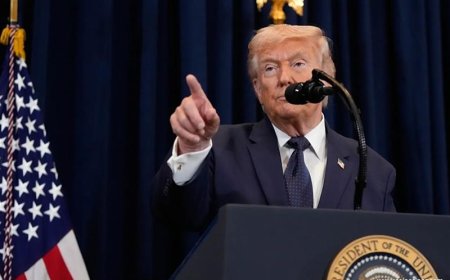
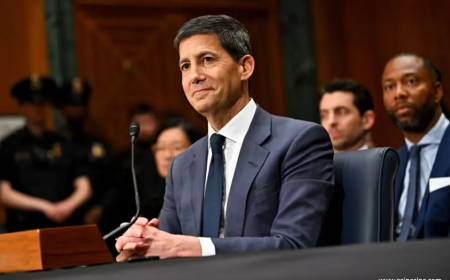
Federal Reserve Governor Christopher Waller has given one of the Fed's clearest signals yet that blockchain-based payments are moving into mainstream finance. That has brought back a familiar question in the XRP community: will the Federal Reserve use XRP?
The short answer is no, at least not now. The Fed has announced no adoption, pilot or partnership involving XRP or Ripple. Still, Waller's speech matters for the XRP story because it describes the kind of payments system Ripple has spent years trying to build.
Key Highlights
- Waller spoke on November 17 at The Clearing House Annual Conference in New York. His speech was titled "Considerations at the Intersection of Payments and Tokenized Markets."
- He said stablecoins are already being used behind the scenes to settle obligations within card networks.
- He argued that central bank money should remain the base of tokenized payments, alongside traditional payment rails.
- He did not mention XRP or Ripple, and he did not announce any blockchain integration with FedNow.
- XRP trades near $1 after falling to about $0.89 on November 14, its lowest level since November 2024.
1. What Did Waller Say?
Waller described a payments system going through rapid change, with tokenization and blockchain driving competition between fintech firms and traditional banks.
His main points:
- Tokenization is becoming mainstream. Institutions are testing blockchain for securities, bank deposits and payments.
- Stablecoins are already in use. They are moving past pilot programs, for example in settling obligations between card networks.
- Tokenized deposits are coming. The Clearing House is one of several groups building a network to clear and settle tokenized bank deposits. Reports say it is expected to open to participants in the first half of 2027.
- Different needs, different rails. Tokenized and traditional payments are expected to work side by side rather than one replacing the other.
- The private sector leads. Waller said the Fed's role is to step in only where markets cannot solve a coordination problem, describing the Fed as a "connector and convener."
- AI and tokenization. He said agentic AI and tokenization could speed up each other's growth.
2. So Where Does XRP Fit?
Waller's speech covered several topics that overlap with Ripple's business, including interoperability, programmable settlement and settling payments 24/7. That overlap is why XRP holders paid attention.
But overlap is not adoption. For the Fed to use any specific digital asset, three things would need to exist:
- A clearly defined operational use case
- A regulatory framework that allows it
- Confirmed technical arrangements
None of these has been announced for XRP.
It is also worth separating XRP from Ripple's products:
- XRP is the native asset of the XRP Ledger. It can serve as a "bridge" currency in cross-border transfers.
- RLUSD is Ripple's dollar-backed stablecoin. It runs on the XRP Ledger and other networks, and RLUSD transactions do not have to involve XRP.
This difference matters. Waller's comments on stablecoins and tokenized deposits arguably support RLUSD and the XRP Ledger as infrastructure more directly than they support XRP the token.
3. The Partnerships Behind the Speculation
Several developments keep the "Fed + XRP" theory going:
- Mastercard and Ripple are exploring RLUSD settlement on the XRP Ledger. The settlement asset is the stablecoin, not necessarily XRP.
- SWIFT's blockchain payments work has raised questions about whether XRP could play a role.
- Ripple Prime is taking part in a DTCC tokenization initiative, though XRP's direct role there is unconfirmed.
- Earlier FedNow speculation: Ripple's past link to FedNow-related discussions led to claims online that the Fed "uses XRP." Being technically compatible or having a third-party connection is not the same as official adoption.
4. XRP Price: The Speech Hasn't Moved the Market
The speech came during one of XRP's weakest stretches in two years.
| Date | XRP close / level |
|---|---|
| November 10, 2026 | $1.057 |
| November 13, 2026 | $1.011 |
| November 14, 2026 | $0.914 (intraday low ~$0.894) |
| November 17, 2026 (speech day) | $0.984 |
| November 19, 2026 | ~$0.98 |
The November 14 close was XRP's lowest since November 2024. The drop wiped out most of the rally that followed the 2024 US election, and XRP is now down roughly 74% from its July 2025 all-time high of $3.65.
The wider market looks weak too:
- Bitcoin fell to about $55,250 on November 21, a two-year low, before recovering to around $61,000.
- US spot Bitcoin ETFs recorded heavy outflows.
- The Crypto Fear & Greed Index remains in extreme fear.
There is one positive on-chain signal: XRP whales have pulled coins off Binance since November 10, which reduces the supply sitting on exchanges. Even so, XRP keeps getting rejected at the $1 level.
Key levels to watch: $1.00–$1.05 as resistance, and $0.89 (the yearly low) and then $0.88 as support.
5. Bullish Case vs Reality Check
Why XRP bulls see this as positive:
- A sitting Fed governor openly supports tokenization, stablecoins and private-sector payment innovation.
- Waller has long supported competition from non-bank payment providers.
- Ripple's products are built for interoperable, around-the-clock settlement, which is what he described.
Why caution is warranted:
- Waller said central bank money should stay at the core of tokenized payments. That points to tokenized deposits and regulated stablecoins, not a volatile bridge asset.
- No implementation timeline was announced.
- Policy support for "blockchain" helps many networks at once, including Ethereum, Canton, Solana and bank-run ledgers, not just the XRP Ledger.
What Happens Next?
Things to watch:
- Progress on The Clearing House's tokenized deposit network ahead of its expected 2027 launch
- Any official Fed guidance on how stablecoins and tokenized deposits connect to Fed payment rails
- Updates on Ripple's RLUSD partnerships with Mastercard and in DTCC tokenization
- Whether XRP can reclaim $1 and hold above the $0.89 low as crypto sentiment recovers
Final Takeaway
Waller's speech is a real signal that US regulators are moving toward a payments system that includes tokenization and stablecoins. That is good for blockchain infrastructure as a whole, and arguably for Ripple's stablecoin and ledger business.
It is not evidence that the Federal Reserve will use XRP. Until there is an official use case, a regulatory framework and confirmed technical arrangements, claims that the Fed is adopting XRP remain speculation. Meanwhile, XRP's price continues to follow the broader crypto selloff rather than Fed headlines.
FAQ
Is the Federal Reserve using XRP?
No. The Fed has announced no adoption, pilot or partnership involving XRP.
Does FedNow use XRP or Ripple?
No. Waller's speech did not announce any blockchain integration with FedNow.
What did Waller say about stablecoins?
He said they are already being used behind the scenes to settle obligations between card-network participants.
Is RLUSD the same as XRP?
No. RLUSD is Ripple's dollar-backed stablecoin. XRP is the native token of the XRP Ledger.
Disclaimer: This article is for informational and educational purposes only and does not constitute financial or investment advice. Coinccino does not provide buy or sell signals.